Who Are the Albanian People? Where They Come From, What Language They Speak and Where They Live
Albanians are an indigenous Balkan people with a language of their own. We look at their origins, the name shqiptar, numbers by country, Ghegs and Tosks, the Arbëreshë, besa and hospitality, and famous Albanians.
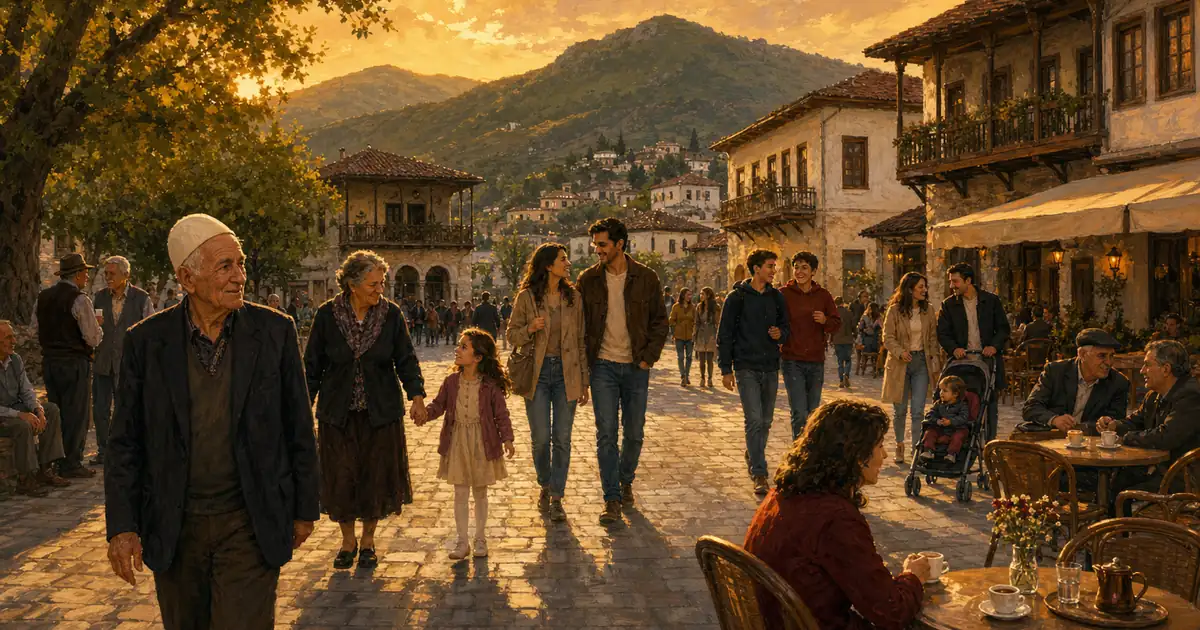
The Albanian people are indigenous to the Balkans and speak a language of their own that has no close relatives. About 2.2 million Albanians live in Albania itself, and according to an estimate by Britannica there are about 7 million worldwide. Outside Albania, many live in Kosovo, North Macedonia, Montenegro and Serbia, as well as in Italy, Greece, Germany, Switzerland and the United States.
Albanians are not Slavic, nor are they Greek. Read on to find out what is known about their origins, what Albanians call themselves, where they live and in what numbers, and what they are proud of.
What Albanians call themselves
Albanians call themselves shqiptarë. An Albanian man is a shqiptar and an Albanian woman a shqiptare; the country is Shqipëria and the language shqip.
This name is relatively recent. In the Middle Ages Albanians called themselves arbër or arbëresh, and their land Arbëria. By the late 17th and early 18th centuries the new name had replaced the old one, which survived among the descendants of emigrants: the Arbëreshë in Italy and the Arvanites in Greece.
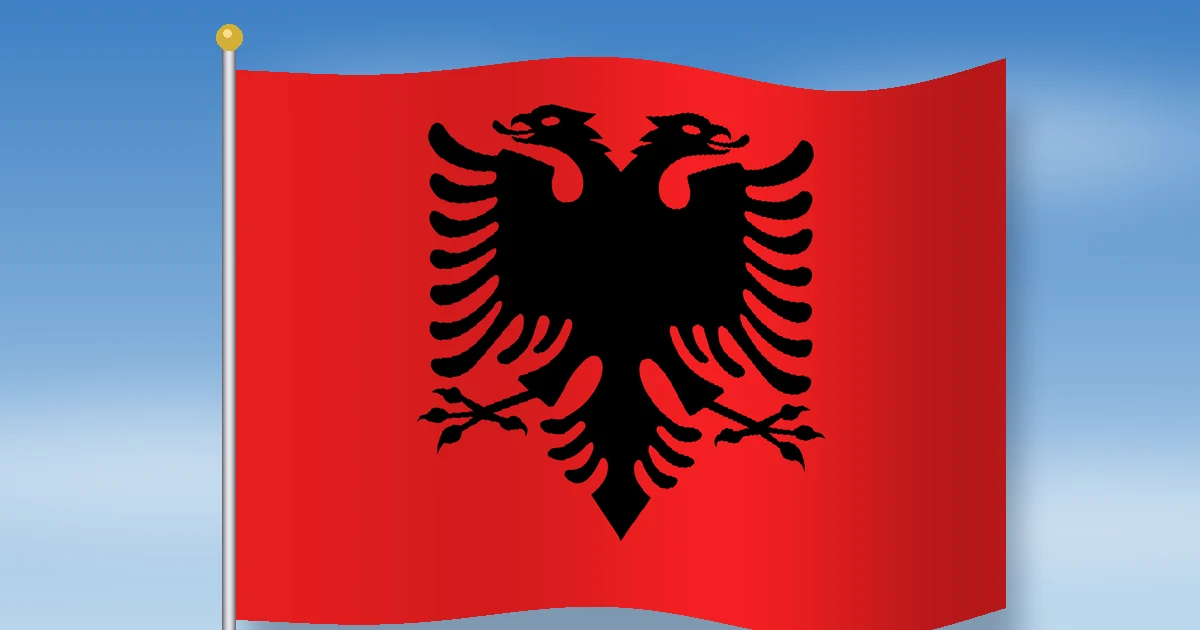
The origin of the word shqip is not known for certain. Linguists more often link it with the meaning “clearly, understandably”, which makes a shqiptar “someone who speaks clearly”. The popular theory about the eagle (shqiponjë) is appealing, but it has no scholarly basis. There is more on this in our article on the Albanian flag.
The English word “Albanians” comes from a different root. In the 2nd century AD Ptolemy mentions a tribe called the Albanoi and a town called Albanopolis in what is now Albania; a link between this tribe and the Albanians is likely but not proven. The first undisputed mention of the Albanians as a people comes from 11th-century Byzantine authors, who write about the Arbanitai.
Albanians have no connection with Caucasian Albania, an ancient state in what is now Azerbaijan: only the name is the same.
Where do Albanians come from?
Albanians are an Indo-European people, and Albanian is the only living language in its own branch of the Indo-European family. It has no close relatives.
Scholars still argue about whose descendants the Albanians are. The most widely held theory is the Illyrian one: Albanians descend from the Illyrians, who lived in the western Balkans in antiquity. There are also theories of Thracian or Dacian roots. All that is left of the Illyrian language is names and a few isolated words, and the first known text in Albanian is a baptismal formula from 1462. That makes a direct link hard to prove. To put it cautiously: Albanians are descendants of the ancient population of the Balkans, and the Illyrian theory is the leading one among historians. Our chapter on the Illyrians and ancient Albania describes how the Illyrians lived.
Genetics looks at the question from another angle. According to a 2026 study in the journal Nature Human Behaviour, the population that lived in the western Balkans in the Late Bronze and Iron Ages was better preserved in early medieval Albania than among its neighbours, and today's Albanians descend mainly from it. Genetically, Albanians are close to the other peoples of the Balkans. But genetics alone cannot settle where the language came from, as the authors themselves point out.
Are Albanians Slavic?
No. Albanian is not a Slavic language, and Albanians are not descended from the Slavs who came to the Balkans in the 6th and 7th centuries. As early as 1308, the anonymous “Description of Eastern Europe” noted that the Albanians had a language of their own, unlike Latin, Greek or the Slavic languages.
The confusion is understandable. The Albanians' neighbours are mostly Slavs. In the 20th century Kosovo, Macedonia and Montenegro, all home to many Albanians, were part of Yugoslavia, literally “the land of the South Slavs”. Albanian has Slavic loanwords as well as features it shares with its Balkan neighbours, such as an article placed after the word, as in Bulgarian and Macedonian. Geneticists also find in Albanians some ancestry from early medieval migrants who are associated with the Slavs: 10–20% on average. But the Albanians' language and identity are not Slavic, and the article and the loanwords are the result of living side by side, not of kinship.
How many Albanians are there, and where do they live?
There is no exact figure: in some countries the census asks about ethnicity, in others only about citizenship. Here are the reliable figures.
| Country | Albanians | Source |
|---|---|---|
| Albania | about 2.19 million (91% of the population) | 2023 census |
| Kosovo | about 1.45 million (about 91% of the population) | 2024 census |
| North Macedonia | 446,245 (24.3% of the population) | 2021 census |
| Montenegro | 30,978 (about 5% of the population) | 2023 census |
| Serbia (excluding Kosovo) | 61,687, mainly in Preševo and Bujanovac | 2022 census |
| Italy | 414,622 Albanian citizens and about 100,000 Arbëreshë | ISTAT, 2025; estimate |
| Greece | 374,926 Albanian citizens | 2021 census |
| Switzerland | Albanian is the main language of about 4% of residents | Swiss Federal Statistical Office, 2023 |
| USA | about 220,000 people of Albanian ancestry | US Census Bureau surveys, 2019–2023 |
Germany does not record ethnicity: more than 320,000 citizens of Kosovo live there (as of the end of 2025), but the statistics give no total for Albanians. Estimates of the number of people with Albanian roots in Turkey range from several hundred thousand to several million, as the census there does not ask about origin. In total, the latest censuses put the number of Albanians in the Balkans at about 4.2 million, while the estimate of 7 million includes the diaspora and Turkey.
Besides Albanians, Albania itself is home to Greeks, Macedonians, Aromanians, Roma, Montenegrins and other minorities.
Ghegs and Tosks
Albanians fall into two large groups by dialect: the Ghegs in the north and the Tosks in the south. The rough dividing line is the Shkumbin river in central Albania. Ghegs live in northern Albania, Kosovo, Montenegro, north-western North Macedonia and southern Serbia. Tosks live in southern Albania and south-western North Macedonia. The Arbëreshë and the Arvanites also speak Tosk varieties.
Standard Albanian is based mainly on the Tosk dialect: its rules were approved by the Orthography Congress in Tirana in 1972, and the Albanians of Yugoslavia had adopted this standard even earlier, in 1968. Ghegs and Tosks understand each other, although there are noticeable differences in pronunciation and vocabulary. There is more about the dialects in our article on the Albanian language.
The Arbëreshë and the Arvanites
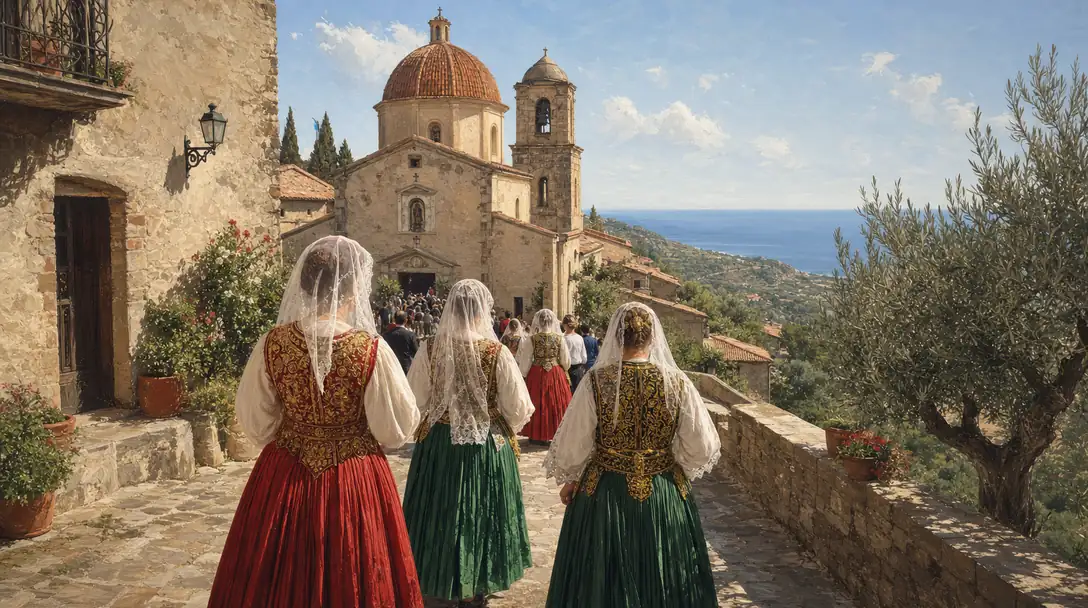
The Arbëreshë are the Albanians of Italy. Their ancestors moved to southern Italy between the mid-15th and the mid-18th century. The first to arrive, in 1448, were soldiers sent by Skanderbeg to help Alfonso of Aragon. Albanians fled in large numbers after Skanderbeg's death in 1468, as the Ottomans were conquering the country. Today about 50 Arbëresh communities are scattered across seven regions of southern Italy, most of them in Calabria. The best-known town is Piana degli Albanesi in Sicily. The Arbëresh language is protected by Italy's 1999 law on linguistic minorities.
The Arvanites are descendants of Tosk Albanians who settled in Greece in the 14th to 16th centuries: in Attica, Boeotia, the Peloponnese and Euboea. They are Orthodox Christians and almost all of them consider themselves Greek, while their language, Arvanitika, is gradually dying out.
Besa, hospitality and other customs
The key word in Albanian ethics is besa: one's given word, a pledge of honour. Breaking your besa is a disgrace. Besa explains why Albanians hid Jews during the Second World War, both local Jews and refugees. By the end of the war there were more Jews in Albania than before it. Israel's Yad Vashem memorial has recognised 75 Albanians as Righteous Among the Nations (as of 2022).
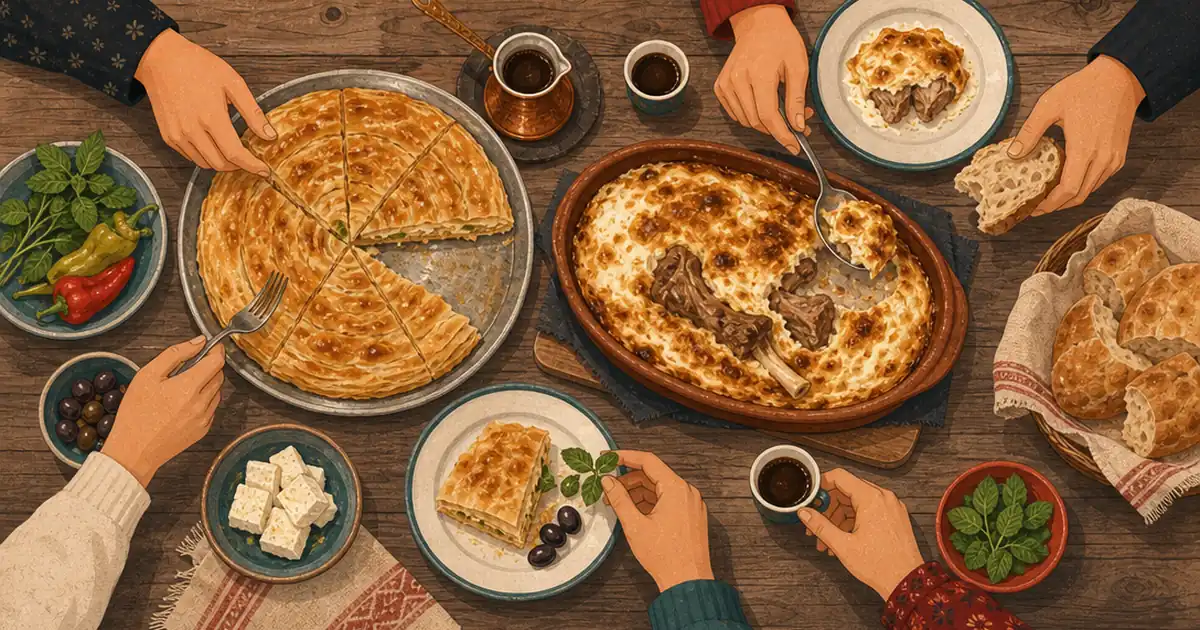
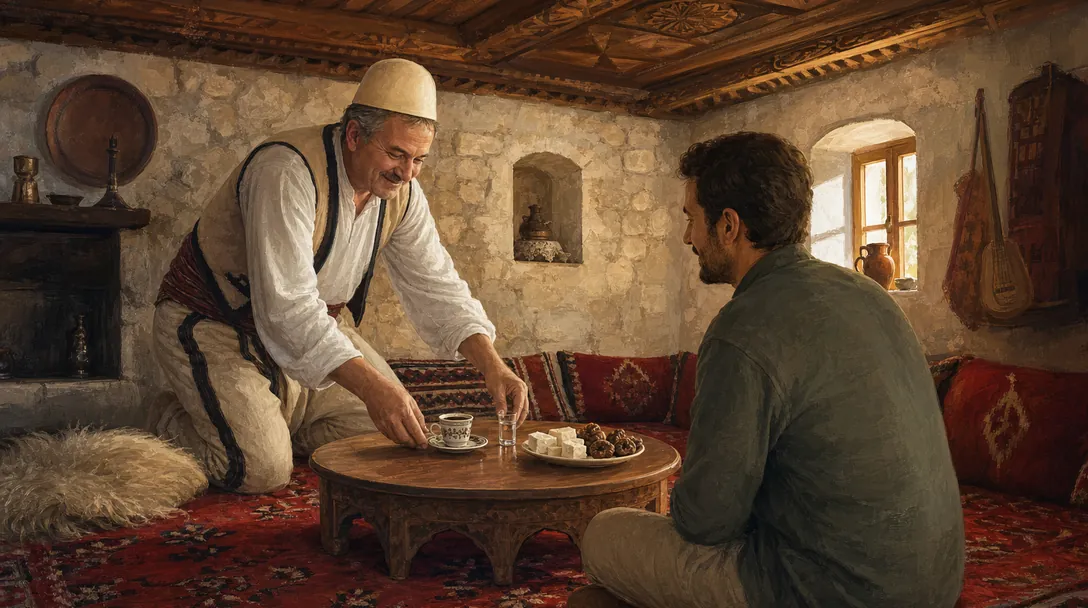
The second pillar is hospitality. The Kanun, the old customary law of the northern mountains, requires you to greet a guest with Mirë se erdhe! (“Welcome!”) even if there is a blood feud between you. Today things are simpler: guests are welcomed with coffee, raki and something to eat, and it is hard to leave without them.
The Kanun is associated with Prince Lekë Dukagjini (15th century), who brought together existing oral law rather than inventing it. It was written down by the priest Shtjefën Gjeçovi: part of it appeared in 1913 and the complete book in 1933. The communists suppressed blood feuds under the Kanun; in the 1990s they returned in places, but for most Albanians the Kanun is history, not a rule to live by.
Everyday life means coffee. “Shall we go for a coffee?” is the usual way to suggest meeting up, and in the evening, towns come out for the xhiro, a leisurely stroll along the main street.
What religion are Albanians?
Historically, Albanians have been divided between Islam and Christianity, but here faith rarely divides people. According to the 2023 census, Muslims and Bektashis together make up 50.7% of Albania's population, Catholics 8.4%, Orthodox Christians 7.2% and believers without a denomination 13.8%, while 15.8% did not answer the question on religion or there is no data for them. In Kosovo the share of Muslims is higher: 93.5% according to the 2024 census. There is more detail in our article on religion in Albania.
Famous Albanians
Skanderbeg (Gjergj Kastrioti, 1405–1468): the national hero, who held off the Ottomans for about 25 years.
Mother Teresa (Anjezë Gonxhe Bojaxhiu): born in Skopje in 1910 to an Albanian family; winner of the 1979 Nobel Peace Prize.
Ismail Kadare (1936–2024): a writer from Gjirokastër and the first winner of the Man Booker International Prize (2005).
Gjergj Fishta (1871–1940): a Franciscan poet, author of the epic “The Highland Lute”.
Dua Lipa: a singer, born in London in 1995 to Albanian parents from Pristina.
Rita Ora: a singer, born in Pristina in 1990.
John and Jim Belushi: American actors, sons of an immigrant from a village near Korçë.
Ferid Murad: an American pharmacologist, the son of an Albanian immigrant, who won the 1998 Nobel Prize in Physiology or Medicine.
Majlinda Kelmendi: the 2016 Olympic judo champion, who won Kosovo's first Olympic medal.
How Albanians choose names for their children and what surnames ending in -aj mean is explained in our article on Albanian names.
Frequently asked questions
Are Albanians Slavic?
No. Albanian is not a Slavic language: it forms a separate branch of the Indo-European family. Albanians are an indigenous Balkan people. The features they share with their Slavic neighbours developed over centuries of living side by side, not through kinship.
Where do Albanians come from?
This has not been established for certain. The leading theory traces them to the Illyrians, the ancient population of the western Balkans. There are also theories of Thracian and Dacian roots. Genetics shows that Albanians descend mainly from the local population of the Late Bronze and Iron Ages.
What do Albanians call themselves?
Shqiptarë: one Albanian is a shqiptar, and the country is Shqipëria. In the Middle Ages they called themselves arbër or arbëresh, a name kept by the Arbëreshë in Italy and the Arvanites in Greece.
How many Albanians are there in the world?
There is no exact figure. Britannica estimates the number of Albanians at about 7 million. The 2023 census counted about 2.19 million Albanians in Albania, the 2024 census about 1.45 million in Kosovo and the 2021 census about 446,000 in North Macedonia.
What religion are Albanians?
They follow different faiths. In Albania about half the population are Muslims and Bektashis; there are also Catholics (more of them in the north-west) and Orthodox Christians (more of them in the south), and many believers without a denomination. In Kosovo, 93.5% are Muslims.
What is the difference between Ghegs and Tosks?
Dialect and where they live: Ghegs live north of the Shkumbin river and in Kosovo, Tosks to the south of it. Standard Albanian is based mainly on Tosk.
Sources
- Britannica: Albania
- Britannica: Albanian language
- Wikipedia: Albanians
- Wikipedia: Origin of the Albanians
- Wikipedia: Names of the Albanians and Albania
- INSTAT: Census of Population and Housing 2023
- Kosovo: first final results of the 2024 census
- State Statistical Office of North Macedonia: Census 2021
- Nature Human Behaviour (2026): Davranoglou et al.
- Wikipedia: Arbëreshë people
- Wikipedia: Arvanites
- Yad Vashem: BESA — a code of honor